

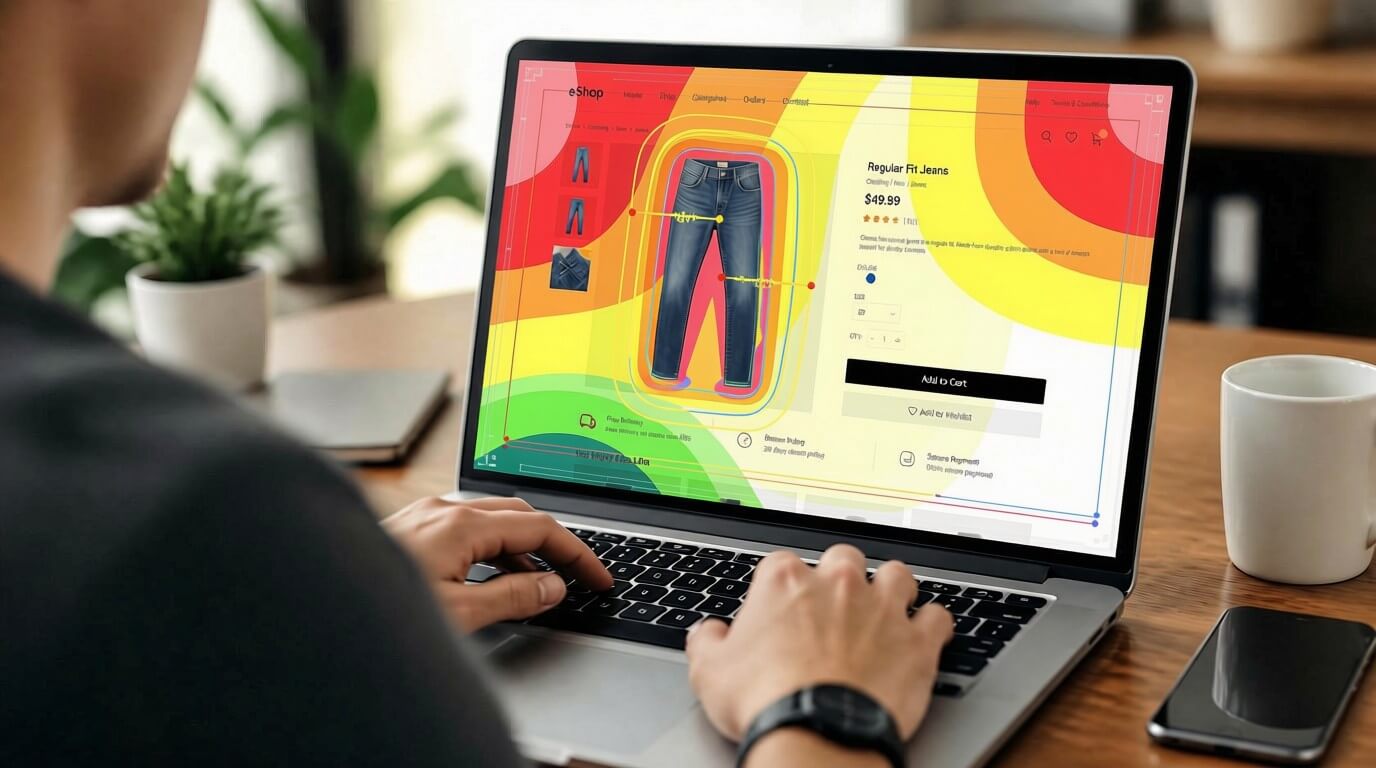
Well-designed surveys can capture customer data that meaningfully informs UX strategy, but only when they’re built on solid research fundamentals and current best practices. At our recent live event, Designing Surveys for UX Research, instructor and research expert Marni Martens shared a practical look at how to do exactly that.
Below are the top 10 fundamentals tips and lessons from the session:
- UX ≠ Usability
- Usability focuses on whether a user can successfully complete a task.
- User experience (UX) is broader: it includes the full interaction, as well as the user’s thoughts, emotions, and perceptions.
- Think of usability as one part of a broader UX scope.
- Usability has three core dimensions. Based on ISO 9241-11 , usability is commonly measured across three dimensions:
- Effectiveness: Can users complete the task?
- Efficiency: How much effort, time, or friction does it require?
- Satisfaction: How positive, negative, easy, or frustrating was the experience?
- UX research should anchor in real experiences. As much as possible:
- Measure behaviors tied to actual product interactions, not abstract recall.
- Ask questions immediately after tasks, when memory is freshest.
- Focus on real touchpoints: tasks, decisions, and moments of friction.
- In short: fewer hypotheticals, more reality.
- When designing UX-related surveys or discussion guides, speak the user’s language:
- Avoid internal company jargon.
- Use terms your audience naturally uses.
- Reflect how users think about the experience, not how the product development team describes it.
- Standardized usability metrics add rigor. UX research often uses standardized measures to:
- Benchmark over time.
- Compare across products, versions, or competitors.
- Quantify improvements with consistency.
- Formative vs. summative usability research
- Formative usability research is early-stage and exploratory; it identifies issues, friction points, and opportunities.
- Summative usability research is later-stage and evaluative; it measures how well a product, prototype, or experience performs.
A simple shorthand: Formative asks, “What’s broken?” Summative asks, “Did we fix it?”
- Severity and prevalence both matter. In usability research:
- A problem affecting only a few users may still be critical if it blocks task completion.
- A frequent issue may be lower priority if it causes only minor friction.
- Severity ratings help prioritize what to fix first.
- The best prioritization considers both severity and frequency.
- Two essential usability survey toolsSingle Ease Question (SEQ)
- Measures perceived ease of a specific task.
- Asked immediately after a task attempt.
- Fast, simple, and highly actionable.
- Useful in moderated or unmoderated studies.
Example: Overall, how difficult or easy was this task to complete?
System Usability Scale (SUS)
- 10-item standardized scale.
- Administered at the end of a session or after users have interacted with the product.
- Produces a benchmarkable usability score.
- Useful for comparisons over time, across versions, or against norms.
- Triangulation makes UX research stronger. Best practice is to combine:
- Standardized measures, such as SEQ and SUS.
- Product- or category-specific benchmarks.
- Behavioral observation.
- Qualitative data.
Custom questions should reflect the context. For example, attitudinal questions about medical devices may be very different from attitudinal questions about online gaming.
This combination helps reveal both what happened and why it happened.
- Practical design principles. When writing UX surveys:
- Tie questions to actual user behavior.
- Ask as close to the experience as possible (even waiting a day impacts recall accuracy and granulatrity).
- Use validated metrics when benchmarking matters.
- Always align the research design to the business objective; not all UX surveys measure the same things.
Bottom line
Executing useful and successful UX surveys requires two broad kinds of knowledge. The first is a foundation in survey research generally. The second is command of the current best practices, frameworks, and benchmarks specific to UX. Of course, the same holds for other survey research use cases such as pricing studies, market segmentation modeling, and loyalty measurement. In all cases, research professionals work to execute at a level of rigor that requires current foundational survey research knowledge, and application-specific knowledge, all in the interest of data quality.
UX surveys are also often combined with other customer insights data sources. These may include behavioral testing data (heatmaps, click paths, eye tracking, etc.), or other first-party data (such as passive behavioral data from sources such as fitness wearables or utility meters) or third-party data. They may also include qualitative methods such as IDIs, dyads and triads, online discussions, focus groups, ethnography and mobile ethnography. Often, the initial discovery and customer exploration happen through qualitative methods, and quantitative research follows, though sometimes the sequence is reversed.
For our August and September Live Event details, visit our schedule.